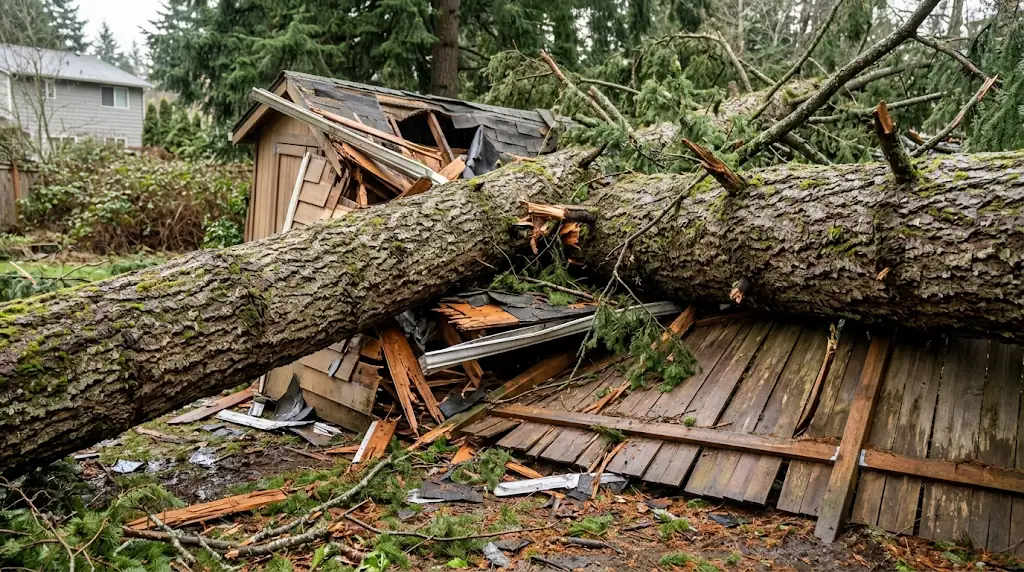
Yes, homeowners insurance covers tree removal in Kent, WA, but typically only if the fallen tree damages an insured structure such as your house, detached garage, or perimeter fence during a covered storm event. If a tree topples into your open yard, garden, or driveway without damaging an insured building, insurance policies generally exclude removal and debris haul-away costs entirely.
Understanding how insurance carriers categorize structural damage, debris removal sublimits, and homeowner negligence determines whether your storm cleanup is paid by insurance or out of pocket.
Kent Storm Damage & Insurance Coverage at a Glance
Insurance policies treat tree removal based on what the tree hit, why it fell, and which specific coverage section applies under Washington insurance regulations.
| Storm Impact Scenario | Covered by Insurance? | Applicable Policy Section | Coverage Details & Payout Limits |
| Tree Crushes House Roof / Trusses | Yes | Dwelling Coverage (Coverage A) | Pays to crane the tree off the home and repair structural framing, minus your deductible. |
| Tree Destroys Detached Garage / Shed | Yes | Other Structures (Coverage B) | Covered up to standard 10% of dwelling limit; covers structural extraction. |
| Tree Falls on Lawn (No Property Hit) | No | Excluded (No property damage) | Homeowner pays 100% of felling, bucking, and disposal costs. |
| Tree Blocks Residential Driveway | Sometimes | Additional Debris Coverage | Some carriers pay $500 to $1,000 if the tree blocks vehicular access or handicap ramps. |
| Tree Crushes Vehicle in Driveway | Yes (Via Auto Policy) | Comprehensive Auto Coverage | Homeowners insurance denies this; auto comprehensive pays vehicle repair minus auto deductible. |
| Neighbor’s Tree Hits Your House | Yes | Your Homeowners Policy | Your carrier pays your repairs; you pay your deductible unless neighbor’s prior neglect is proven. |
| Visibly Rotted / Dead Tree Falls | No (Denied) | Policy Maintenance Exclusion | Insurer denies claim citing lack of routine property maintenance and known neglect. |
When Insurance Pays: The Covered Structure Rule
Under standards outlined by the Washington State Office of the Insurance Commissioner, standard homeowners insurance policies (such as HO-3 and HO-5 forms) require a covered peril to damage a covered structure before tree removal benefits kick in.
Covered perils in Western Washington windstorms include:
- Sustained wind gusts exceeding 45 mph
- Wind-driven heavy rainfall and atmospheric rivers
- Lightning strikes
- Heavy winter snow or ice loading that snaps limbs
If one of these weather events knocks a 90-foot Douglas fir onto your living room, insurance steps in. However, the insurer splits the work into two distinct billing items:
1. Removing the Tree from the Structure (Fully Covered)
The labor, rigging, and crane operations required to hoist the tree off the roofline, chimney, or exterior walls are considered structural protection under Dwelling Coverage (Coverage A). Because the weight of the timber threatens to collapse trusses or punch through ceilings, insurers cover the full cost of lifting the tree to ground level, subject to your policy deductible.
2. Debris Haul-Away (Capped by Sublimits)
Once the tree is safely resting on the ground, coverage changes. Insurers view cutting the log into rounds, chipping branches, and hauling wood off-site as debris removal. As detailed in the Washington Debris Removal Insurance Guide, most policies place a strict sublimit on green waste disposal—typically $500 to $1,000 per tree, with an aggregate limit of $1,000 to $2,000 per storm event.
Because removing and hauling a massive 80-to-100-foot conifer in South King County can cost $2,000 to $3,500, property owners frequently pay the remaining disposal balance out of pocket.
The Lawn Scenario: When Insurance Denies Tree Removal
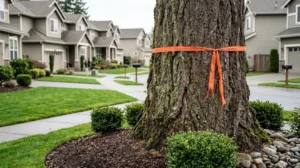
The most frustrating scenario for homeowners after a Puget Sound storm involves a mature tree falling entirely across an open lawn or backyard.
If a healthy 70-foot Western red cedar uproots in heavy winds and lands across your grass without scratching a gutter, siding, or fence, your homeowners insurance will not pay to remove it. Insurance companies insure structures, not landscaping. Because no building suffered physical damage, no insurable loss occurred. The homeowner bears full responsibility for hiring a tree service to cut up the trunk and haul away the debris.
The sole common exception: certain premium policies provide up to $500 or $1,000 in debris coverage if a fallen tree completely blocks a residential driveway, preventing the homeowner from entering or exiting the property, or if it blocks a ramp designed for persons with disabilities.
Neighbor’s Tree Falls on Your House: The Washington “Act of God” Rule
When a neighbor’s tree crashes through your roof during an autumn storm in Kent, homeowners frequently assume the neighbor’s insurance policy must pay for all repairs. Under Washington State tort law, this assumption is incorrect.
The “Act of God” Standard
Washington law treats severe windstorms and sudden weather events as “Acts of God.” If the neighbor’s tree was visibly healthy and showed no documented outward signs of decay, the neighbor is not legally liable for the damage.
- You must file the claim through your own homeowners insurance.
- You must pay your own policy deductible (typically $1,000 to $2,500).
- Your carrier pays for your structural repairs and basic tree extraction.
Overcoming the Rule: Proving Neighbor Negligence
The neighbor’s liability insurance pays only if you can prove legal negligence. To prove negligence, you must demonstrate that:
- The tree exhibited obvious, dangerous defects (such as heavy rot, dead leaders, or severe lean).
- The neighbor knew or reasonably should have known about the danger.
- The neighbor failed to take corrective action.
A verbal conversation over the back fence does not hold up with insurance adjusters. However, if you sent your neighbor an ISA-certified arborist risk assessment via USPS Certified Mail before the storm, your insurance company can use that documentation during subrogation to force the neighbor’s insurer to reimburse your entire claim and refund your deductible.
The Neglect Clause: Why Insurers Reject Claims
Insurance policies contain strict exclusions for losses resulting from deferred maintenance, dry rot, wear and tear, or intentional neglect.
When an insurance adjuster inspects a fallen tree, they evaluate the break point, stump, and root ball:
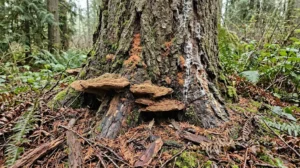
- Evidence of Root Rot: If the root flare exhibits advanced fungal conks (Phaeolus schweinitzii) or brittle, honeycomb-textured wood from laminated root rot (Coniferiporia sulphurascens), the adjuster may argue the tree was dead or structurally compromised long before the wind arrived.
- Dead Wood and Infestations: A tree stripped of bark, riddled with beetle galleries, and standing leafless for years is an unmitigated hazard.
If the insurance carrier concludes that routine property maintenance would have identified and removed the dead tree before it failed, they can legally deny both the structural repair and debris removal claims, leaving you with tens of thousands of dollars in restoration bills.
Local King County Debris Fees vs. Policy Payouts
The gap between insurance debris sublimits and actual tree removal bills in Kent is driven by regional disposal costs and equipment overhead:
- Regional Transfer Station Rates: King County operates the nearby Bow Lake Transfer Station in Tukwila. The King County Solid Waste Division sets yard waste and clean wood disposal fees at $129.38 per ton. Hauling away a single 90-foot Douglas fir generates 6 to 12 tons of heavy, water-logged timber and brush, resulting in $775 to $1,550 in pure tipping fees before factoring in labor, trucking, and equipment fuel.
- Crane Mobilization Costs: When a storm-damaged tree leans precariously over an unstable roof deck, standard bucket trucks cannot reach it safely. Bringing a 50-to-100-ton hydraulic mobile crane to a residential Kent neighborhood adds $1,200 to $2,000 in equipment mobilization fees.
Because standard debris removal clauses cap payments at $500 or $1,000, homeowners should regularly check their policy declarations page and consider adding an extended debris removal endorsement to cover local tree processing realities.
How to File a Storm Tree Damage Claim in Kent
To maximize claim approval and speed up processing, follow this step-by-step checklist immediately following a storm:
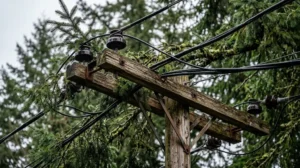
- Verify Life Safety First: Evacuate rooms beneath the impact area. Stay at least 35 feet away from any utility lines touching fallen branches.
- Take Extensive Photographic Proof: Photograph the tree’s position on the roof from multiple angles. Capture clear photos of the root ball and trunk base to prove the tree was alive and windthrown, not dead from long-term neglect.
- Open the Claim Immediately: Call your insurer’s 24/7 claims hotline to secure a claim reference number. Confirm your deductible and ask specifically for your policy’s debris removal limit.
- Perform Emergency Mitigation: Washington insurance contracts require policyholders to prevent secondary damage. Have an emergency crew remove the weight off the roof and screw heavy-duty polyethylene tarps over openings to keep out rain. Save every receipt.
- Verify Kent City Rules: Emergency hazard removals involving immediate structural threats do not require advance municipal permits under the City of Kent Land Use & Environmental Regulations. Take photos to verify the hazard for municipal records if your property borders an environmentally critical slope.
Protect Your Kent Home from Storm Damage
Navigating the aftermath of a fallen tree requires fast emergency stabilization, precise insurance documentation, and safe, crane-assisted dismantling. If a storm has damaged trees on your residential or commercial property in Kent, visit our contact page to schedule an immediate on-site hazard evaluation, emergency structural tarping, and insurance-ready tree removal with Kent Tree Removal.