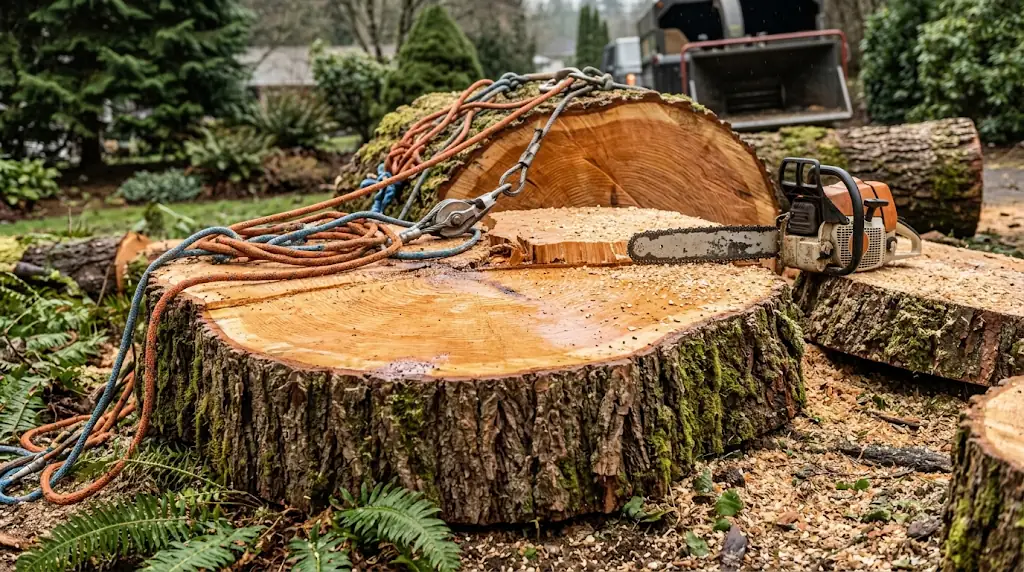
Tree removal in Kent, WA costs between $450 and $2,800 on average, with most residential projects for mature native conifers landing between $1,400 and $2,400. Total expenses range from as low as $300 for small ornamental saplings to upwards of $5,000 for massive, crane-assisted Douglas firs situated near structures or steep hillside ravines.
Every tree removal quote reflects tree height, trunk diameter at breast height (DBH), structural decay, target hazards, crew access, and King County green-waste disposal fees.
Kent Tree Removal Cost by Size and Complexity
Tree felling and dismantling costs in South King County scale primarily by tree volume, wood density, and technical rigging requirements.
| Tree Size Category | Height / DBH Thresholds | Common Kent Species | Average Cost Range | Typical Equipment Required |
| Small Trees | Under 30 feet / <10 in. DBH | Japanese Maple, Dogwood, Fruit Trees | $300 – $650 | Ground crew, chainsaws, light chipper |
| Medium Trees | 30 to 60 feet / 10–20 in. DBH | Red Alder, European Birch, Cherry | $650 – $1,400 | Bucket truck or aerial climber, standard chipper |
| Large Trees | 60 to 90 feet / 20–36 in. DBH | Western Red Cedar, Bigleaf Maple | $1,400 – $2,600 | Heavy rigging, sectional lowering blocks, log loader |
| Extra-Large Trees | 90 to 120+ feet / 36+ in. DBH | Mature Douglas Fir, Western Hemlock | $2,600 – $4,800+ | Mobile crane, multi-stage rigging, heavy-duty chip truck |
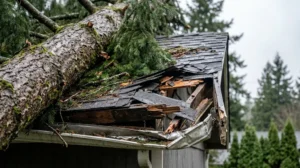
| Severe Hazard / Storm Damage | Any size (Split, hanging, root-sprung) | Any species leaning on or over structures | $2,200 – $5,500+ | 50-to-100-ton crane, grapple truck, emergency crew |
Cost Breakdown by Tree Size and Species in Kent
Native Pacific Northwest trees grow significantly larger than suburban canopy species in other regions of the country. A standard 80-foot evergreen in a Kent neighborhood contains substantial biomass that demands specialized sectional dismantling.
Small Tree Removal: $300 – $650
Small ornamental species under 30 feet rarely require technical aerial rigging. Crews drop these trees using standard directional felling notches if yard space permits, or dismantle them with pole saws and step ladders. Examples include ornamental cherries, flowering dogwoods, crabapples, and dwarf conifers. Ground cleanup and brush processing take two to three hours for a two-man crew.
Medium Tree Removal: $650 – $1,400
Deciduous species and young evergreen trees between 30 and 60 feet require an aerial climber or bucket truck access. Common local varieties include red alders (Alnus rubra), paper birches, and medium-sized bigleaf maples. In residential neighborhoods like Panther Lake or Benson Hill, crews lower branches individually using friction brake devices (Port-A-Wraps) to avoid impacting fences, outbuildings, or landscaped turf.
Large Mature Conifers: $1,400 – $2,600
Western red cedars (Thuja plicata) and Douglas firs (Pseudotsuga menziesii) between 60 and 90 feet represent the baseline for standard mature removals in Kent. These specimens possess heavy, moisture-dense timber and massive branch spreads. Dismantling a 75-foot conifer requires an arborist to climb the spar, limb the trunk while ascending, top the tree, and lower dense trunk sections on static rigging lines. This process requires a three-to-four-person crew and four to eight hours of on-site labor.
Extra-Large and Crane-Assisted Removals: $2,600 – $4,800+
First-growth second-generation conifers exceeding 100 feet in height or 36 inches in diameter demand extensive labor and heavy machinery. When zero drop zones exist—such as between two houses on narrow West Hill residential lots—crews must deploy a mobile crane to lift 1,000-to-3,000-pound log sections up and over the roofline directly to the street. Crane rental mobilization alone introduces an operational base cost of $1,200 to $2,000.
5 Primary Factors That Drive Tree Removal Pricing in Kent
Tree removal pricing is calculated on risk, labor hours, and equipment deployment. Five localized conditions dictate the final quote on any Kent property:
1. Parcel Topography and Micro-Geography
Kent’s landscape shifts from the flat alluvial floor of the Green River Valley to the steep, erosion-prone grades of East Hill and West Hill. Removing a tree anchored to a 40% slope along an East Hill ravine requires specialized rope-access rigging, winches, and tracked mini-skid steers to haul rounds up to the street. Steep slope removals carry a 25% to 50% labor surcharge compared to level valley lots due to physical difficulty and safety risks.
2. Proximity to Structures and Drop Zone Clearances
A free-fall directional drop in an open half-acre yard costs roughly half of what a piecemeal aerial dismantling costs. When branches hang directly over roof shingles, patio covers, air conditioning condensers, or perimeter fences, every limb must be pre-rigged, tied off, cut, and lowered by hand. This mechanical control multiplies the working hours required on site.
3. Electrical Hazard Clearance
Trees growing within 10 feet of secondary service lines running from the utility pole to the home require careful drop planning or coordination with Puget Sound Energy (PSE) for temporary line disconnects. Removals adjacent to primary three-phase transmission lines require specialized electrical-hazard-certified tree workers, driving up crew hourly rates.
4. King County Debris Disposal and Chipping Fees
Disposing of green waste is a major project expense. Tree services process brush on-site through commercial wood chippers, but heavy trunk wood must be loaded onto dump trailers and hauled away. Clean wood and organic yard waste dumped at local facilities—such as the King County Bow Lake Recycling and Transfer Station—incur tipping fees set by the King County Solid Waste Division, which charges $129.38 per ton for separated yard waste and clean wood. Hauling two mature 80-foot Douglas firs generates between 6 and 14 tons of heavy green wood, creating substantial base disposal expenses.
5. Municipal Permitting and Arborist Assessments
When a project triggers local tree retention codes or sits inside an Environmentally Critical Area (ECA), homeowners must factor in municipal application fees and technical reports:
- ISA Tree Risk Assessment Qualification (TRAQ) Report: $350 – $650 for a certified arborist to inspect the trunk, test internal wood density, document hazards, and draft a formal report.
- City of Kent Land Use & Environmental Review: Municipal application review fees through the City of Kent Permit Center vary based on project scope, adding $150 to $500+ when critical area reviews are mandated.
Add-On Services and Associated Tree Care Costs
Property owners often package supplemental services with their primary tree removal project to restore their yard completely.
| Service Add-On | Cost Range | Pricing Basis | Notes |
| Stump Grinding | $150 – $550 per stump | $3 to $5 per inch of trunk diameter | Grinds 6 to 12 inches below grade; lateral surface roots cost extra. |
| Stump Grind Shavings Haul-Away | $100 – $250 | Per volume pile | Grinding leaves large mounds of mixed mulch and dirt. |
| Firewood Processing (Cut to 16 in.) | $150 – $400 | Per cord / crew hour | Wood is bucked and stacked on site; drying/splitting left to owner. |
| Crane Service Mobilization | $1,200 – $2,500 | Daily or half-day rate | Includes licensed crane operator, rigging gear, and street setup. |
| Emergency After-Hours Response | $500 – $1,500 fee | Flat dispatch surcharge | Applies during severe storm events between 7 PM and 6 AM. |
Seasonal Timing and Puget Sound Weather Impacts
Scheduling tree removal around Western Washington’s seasonal weather patterns can directly affect project efficiency and overall cost:
- The Dry Summer Window (July – September): Ground conditions are firmest during late summer. Heavy machinery, such as spider lifts and mini-loaders, can traverse residential lawns without causing deep tire ruts or destroying turf. However, demand for tree services peaks during these months, meaning contractors rarely discount standard estimates.
- The Wet Winter Window (November – February): Prolonged rainstorms saturate Puget Sound soils, turning residential turf into mud and elevating the risk of equipment rutting. Saturated root systems also increase sudden windthrow risks during seasonal atmospheric rivers. Emergency storm removals carry significant cost premiums due to dangerous, high-risk working conditions. Scheduling non-emergency removals during late winter or early spring often yields faster turnaround times and more competitive crew pricing before peak season begins.
Plan Your Tree Removal Project in Kent
Every property in Kent presents unique physical variables—from tight property lines and steep topography to regulated municipal critical areas. To receive an accurate, upfront cost assessment for taking down a hazardous, dead, or overgrown tree on your property, submit your project details through our contact page to schedule an on-site evaluation and transparent quote with Kent Tree Removal.