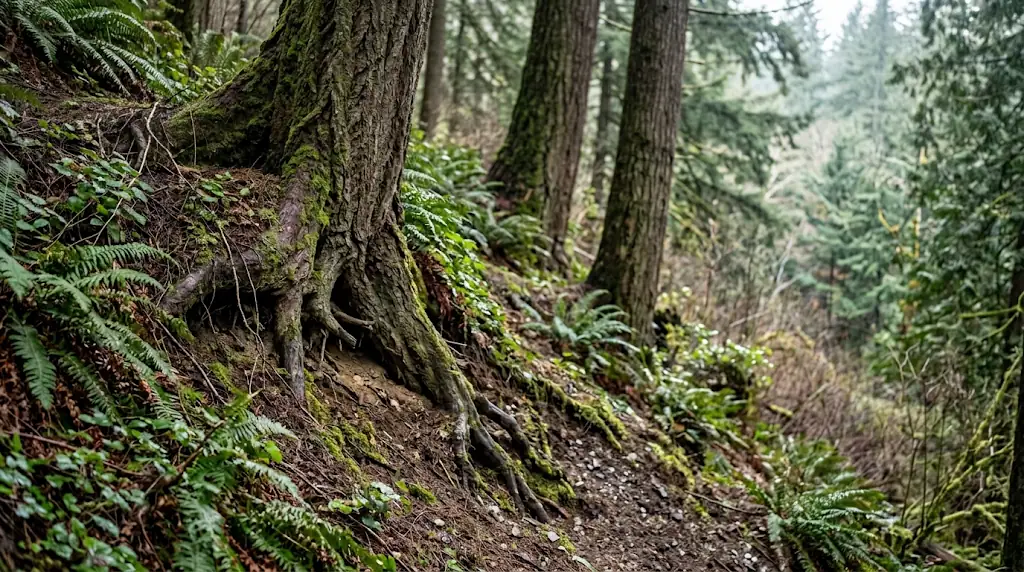
Yes, you can remove trees on steep slopes or environmentally critical areas in Kent, WA, but only with an approved Critical Area Permit and technical documentation verifying that the tree poses an immediate, irremediable hazard. Under Kent City Code Chapter 11.06, the city strictly prohibits cutting, clearing, or altering vegetation across slopes of 40 percent or steeper, erosion hazard zones, and stream buffers unless a licensed geotechnical engineer and an ISA-certified arborist prove that extraction will not cause soil failure or slope instability.
Unauthorized removal in these protected zones results in immediate stop-work orders, steep civil penalties calculated against the appraised timber value, and mandatory restoration replanting bonded for up to five years.
Kent Critical Area Tree Removal Regulations at a Glance
Removing vegetation in protected areas requires specialized administrative pathways and technical oversight based on zoning and physical topography.
| Critical Area Classification | Slope / Environmental Threshold | Governing Code | Mandatory Documentation | Allowed Removal Protocol |
| Steep Slope Hazard Area | $\ge$40% inclination with $\ge$10 ft vertical relief | Kent City Code Chapter 11.06 | Geotechnical evaluation, Critical Area Permit | Flush-cut trunk; root system must remain intact in ground |
| Moderate Landslide Hazard | 15% to 39% slope on permeable soils | KCC Chapter 11.06 | Slope stability analysis, ISA TRAQ report | Controlled sectional rigging or crane pick; zero soil disturbance |
| Wetland & Stream Buffers | Green River, Soos Creek, Mill Creek corridors | King County Critical Areas Regulations | Wetland delineation, Critical Areas Mitigation Plan | Native replacement at 2:1 ratio; wildlife snag creation favored |
| Erosion Hazard Area | Saturated alluvial till / fine silt deposits | KCC Chapter 11.06 | Temporary Erosion and Sediment Control (TESC) plan | Seasonal restrictions; dry-weather execution only (July–Sept) |
| Public Ravines / Hillside Rights-of-Way | Municipal drainage corridors | Kent Public Works Operations | Right-of-Way Permit, City Arborist sign-off | Handled directly by city crews or registered contractors |
What Constitutes a Critical Area in Kent?
The City of Kent enforces protections over environmentally critical areas (ECAs) to mitigate natural hazards and protect Puget Sound watershed basins. Under KCC Chapter 11.06, properties undergo regulatory review if they fall within any of the following parameters:
- Geologically Hazardous Steep Slopes: Any hillside possessing an average gradient of 40 percent or steeper spanning a minimum vertical elevation change of 10 feet. These terrains dominate the transitional escarpments between the Green River Valley floor and the suburban plateaus of East Hill and West Hill.
- Landslide Hazard Areas: Slopes containing permeable glacial outwash sands resting over impermeable Lawton clay or hard glaciomarine drift. When water percolates through sand and encounters slick clay, the interface forms a subterranean slip plane.
- Erosion Hazard Areas: Parcels displaying uncompacted, fine-grained soils vulnerable to sheet erosion, rill formation, and sediment scouring during sustained rainfall.
- Aquifer Recharge & Riparian Corridors: Regulated vegetative buffer zones flanking primary drainages, including the Green River, Mill Creek, and the Soos Creek drainage system.
Why the City Protects Slope Vegetation
Tree roots serve as biological structural engineering systems on Western Washington hillsides. Mature conifers stabilize steep terrain through three mechanical and hydrological processes:
- Root Mechanical Anchoring: Douglas fir (Pseudotsuga menziesii) and Western red cedar (Thuja plicata) develop extensive, interlocking lateral root networks that bind the upper three to five feet of loose soil into a cohesive structural mat. Removing these trees eliminates soil shear strength as root structures decompose over a three-to-seven-year post-felling period.
- Hydrological Canopy Interception: A mature evergreen conifer canopy intercepts up to 30 percent of annual rainfall before precipitation ever touches ground grade. Western Washington averages 38 to 42 inches of rain each year; losing tree canopy coverage directly transfers thousands of gallons of stormwater into the upper soil profile.
- Subsoil Dewatering: During the spring and summer, mature trees draw massive volumes of groundwater through transpiration. This process maintains high negative pore-water pressure inside slope soils, counteracting gravity-driven slide mechanics.
Mandatory Requirements for Removing a Tree in an ECA
Homeowners cannot cut down a tree inside a critical area based solely on personal preference or view clearing. The City of Kent requires five formal verification stages before granting removal authorization:
1. ISA Tree Risk Assessment (TRAQ)
An arborist certified in the ISA Tree Risk Assessment Qualification (TRAQ) must inspect the tree. The arborist documents whether the tree exhibits structural defects, such as internal fungal decay, fractured main stems, root-rot pathogens (Heterobasidion occidentale or Phaeolus schweinitzii), or imminent windthrow failure. If the specimen is structurally sound, the city will deny the removal permit.
2. Geotechnical Engineering Evaluation
A Washington-licensed professional geotechnical engineer (PE) must visit the property to conduct a slope stability analysis. The engineer determines whether felling the tree—and the subsequent death of its root system—will compromise the global stability of the hillside. The geotechnical report dictates the permissible felling method and equipment limitations.
3. Strict Stump Preservation Rules
Standard tree removal operations grind stumps 8 to 12 inches below grade. In Kent critical slope zones, mechanical stump grinding is strictly prohibited.
- Trunks must be flush-cut at ground level using handheld chainsaws.
- The subterranean root mass must remain untouched in the soil to preserve mechanical bank cohesion while replacement vegetation establishes.
- Root-killing chemical treatments are banned to prevent chemical leaching into underlying aquifers and rapid root breakdown.
4. Mandatory 2:1 Replanting and Mitigation Plans
Every approved tree removal in a critical area triggers mandatory mitigation replanting. The City of Kent typically enforces a 2:1 ratio for native canopy replacement.
- Replacement specimens must consist of climate-adapted, Pacific Northwest native species, such as Shore Pine (Pinus contorta), Vine Maple (Acer circinatum), or Red Osier Dogwood (Cornus sericea).
- Container stock must measure a minimum of 1.5 to 2 inches in trunk caliper.
- Applicants must submit a formal three-to-five-year monitoring and maintenance agreement backed by a financial performance bond to guarantee replacement stock survival.
Low-Impact Rigging and Extraction Methods
Traditional heavy equipment cannot operate on Kent’s protected steep slopes without triggering catastrophic ground churning and immediate municipal violations. Certified crews utilize specialized low-impact extraction techniques:
- Crane-Assisted Takedowns: When access allows, a 50-to-100-ton hydraulic mobile crane stages on firm asphalt along upper or lower street grades. The crane operator lifts hooked log sections up and over the slope, lowering wood directly onto processing trucks with zero impact to the slope surface.
- Specialized High-Lead Rope Rigging: On inaccessible hillsides along the West Hill bluffs, climbers use directional zip-lines and high-lead tension lines anchored to heavy boundary spars. Wood chunks and limbs are flown through the air to designated staging pads rather than dropped onto the hillside.
- Habitat Snag Creation (Ecological Topping): If a dead tree poses an aerial target hazard to homes or utility lines, arborists often recommend reducing the tree to a 15-to-25-foot standing habitat trunk (“wildlife snag”). This removes the lever arm that causes tree toppling while preserving the biological root plate and providing cavity nesting habitat for native wildlife.
Penalties for Unauthorized Clearing in Kent Critical Areas
The City of Kent actively enforces environmental codes through aerial satellite surveillance, King County GIS change detection, and neighbor reporting. Clearing trees without authorization triggers severe legal and financial consequences:
- Class 1 Civil Violations: Daily fines accumulate for each unauthorized tree removed.
- Appraised Timber Restitution: Washington courts and municipal hearing examiners assess civil damages using the trunk formula method under the Guide for Plant Appraisal, often exceeding $10,000 to $25,000 per mature specimen.
- Mandatory Restoration Construction: Landowners face mandatory civil orders requiring engineered slope restoration, retaining wall construction, hydroseeding, and mature tree replanting under geotechnical supervision.
- Property Title Clouds: The city records critical area code violations directly against property deeds, halting any future refinancing, building permit issuance, or property sales until environmental restoration covenants are fully resolved.
Secure Expert Tree Assessment on Kent Hillsides
Safely addressing trees on slopes, ravines, and protected buffers in South King County requires meticulous engineering coordination, arborist certifications, and city permit compliance. If you have a damaged, leaning, or failing tree located on a steep bank or environmentally sensitive area, contact our team through our contact page to schedule a comprehensive on-site critical area evaluation with Kent Tree Removal.